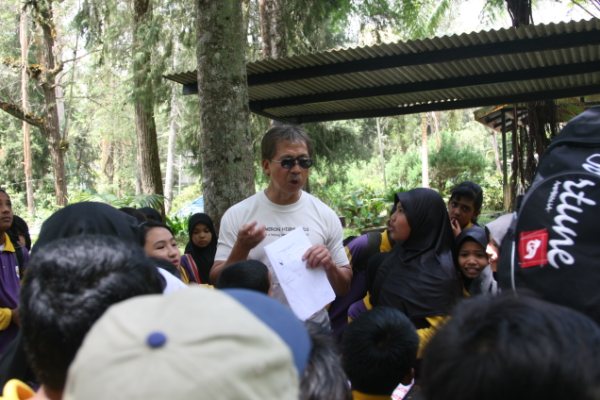
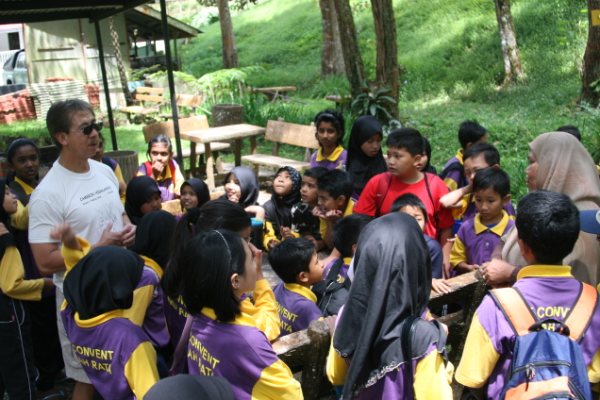
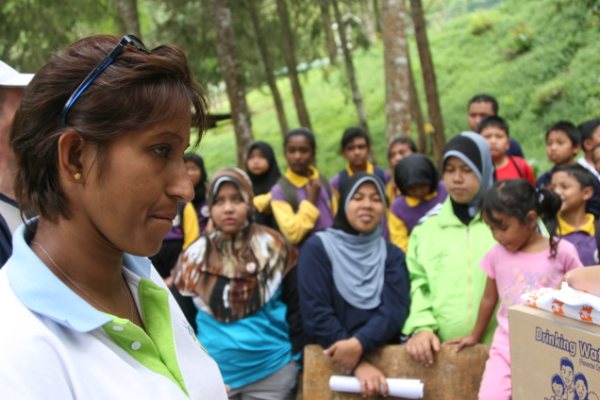
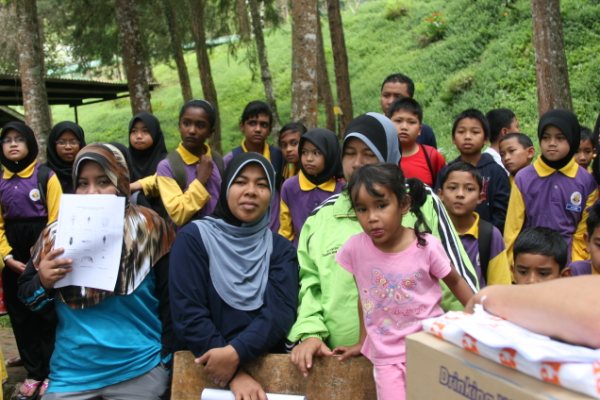
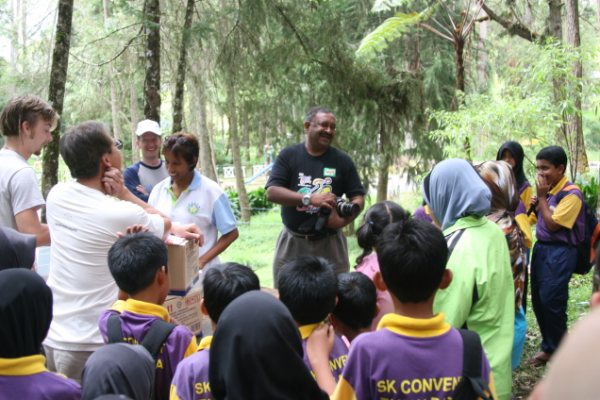
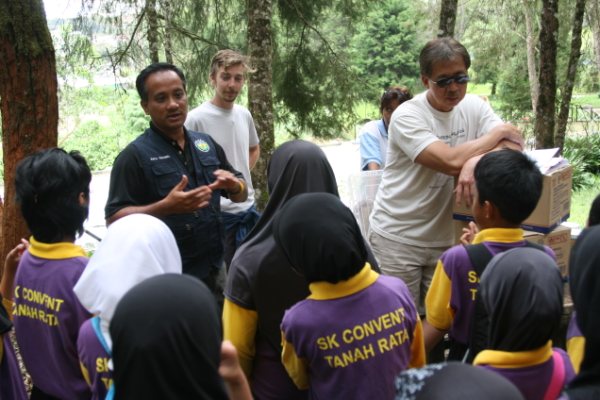
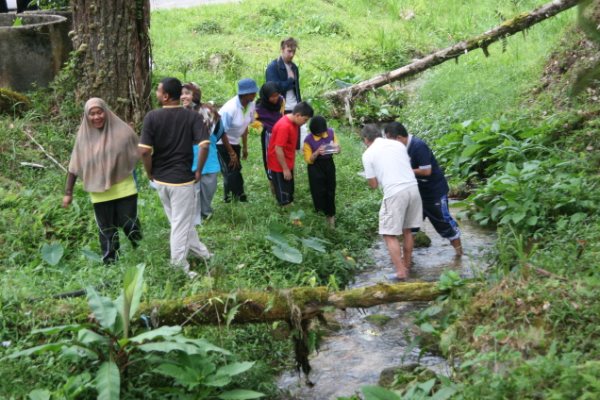
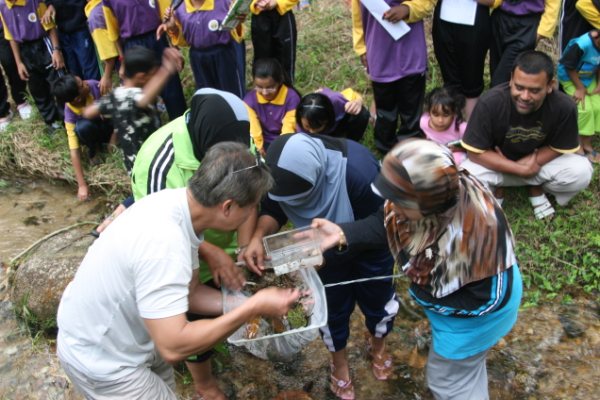
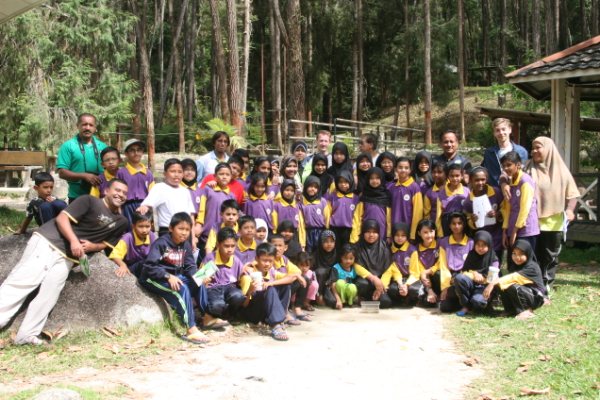
It was not just another ordinary day for members of Convent school in the Cameron Highlands. The field study trip on March 11,2010 was organized by volunteer members of Reach, who planned an exiting afternoon of environmental exploration at the junction of two meandering hillside creeks. The focus was to educate the youth on the measurement of health, cleanliness or degradation in a given watershed. Learning was focused on exploring the indicators of a healthy aquatic ecosystem compared to an unhealthy system, mainly testing for the presence of macro invertebrates and simple temperature,pH and dissolved oxygen content tests were conducted and discussedas well. The kids gathered around in amazement as Dr Liau and other volunteers collected macro invertebrate specimens from the water and Dr Liau explained the significance of these aquatic invertebrates as indicators for both a healthy or polluted stream.
These macro invertebrates collected were identified and recorded by the group, to later compare with the collected results from a polluted stream. As the afternoon progressed we discussed the scientific method ofcollecting information concerning the streams health, by separating into groups where the students were given an opportunity to practice collecting information on the waters temperature, pH, turbidity, and the total dissolved oxygen content. When the hard work was over the students took advantage of the clean tested stream to soak in all of their new knowledge, splash, play and enjoy nature. The day ended with a exited overview of the field study where the students shared what they learnt and brainstormed about the main causes of water pollution in the Cameron Highlands and what we can do to help keep the water clean.
5 problems leading to water pollution:
- solid waste in the river
- agricultural chemicals, fertilizer, pesticides, petrol
- untreated human and animal feces
- deforestation causing silting,
- damming, flow disruption
4 solutions:
- recycle, throw garbage in the bins
- using less harmful chemicals
- separate and treat fecal matter from streams and rivers
- included mandatory riparian buffer in deforestation areas
While overall the day was a great success there is more work to be done in education, rehabilitation and preservation of the precious watersheds here in the Cameron Highlands.
Contact REACH for more information on organizing your schools own community stream investigation.