During our holidays in Malaysia, we wanted to be involved in meaningful experience. Through their website, we learnt about the different activities conducted by REACH in Cameron Highlands. The first meeting with Dr Liau was very interesting and we discussed for 4 hours about the wonders of wildlife and the issues related to the development of Cameron Highlands. Furthermore he introduced us to the stream water analysis programme : Community Stream Investigation programme (CSI).
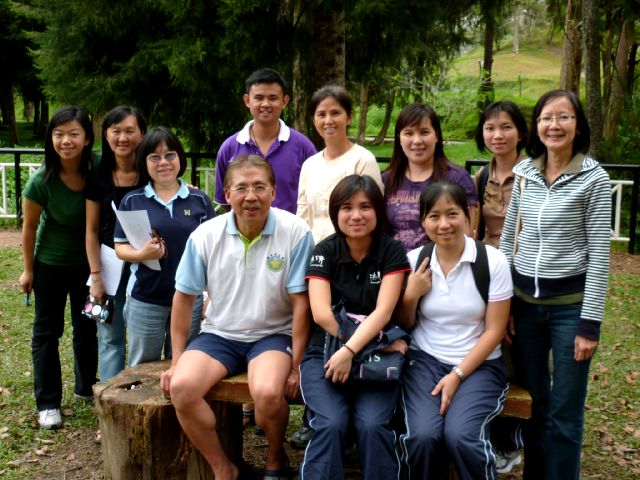
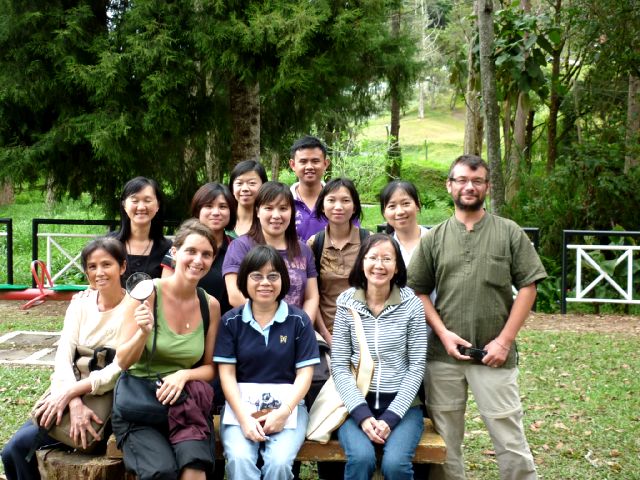
On the 31st of July 2010, teachers of SJK(C) Kuala Terla participated in CSI “training of the trainers” session, a programme designed to teach them simple techniques to test the water of rivers with their students. As volunteers, we witnessed that session and helped Dr Liau during that day.
The programme is composed of 2 parts : one theoretical in the morning and one practical after lunch.
The day started with a lecture by Dr. Liau, introducing REACH (history, objectives, actions…). Next, he talked about the environmental issues brought by over-development in Cameron Highlands. Numerous pictures illustrated very well the change over time of the Highlands.
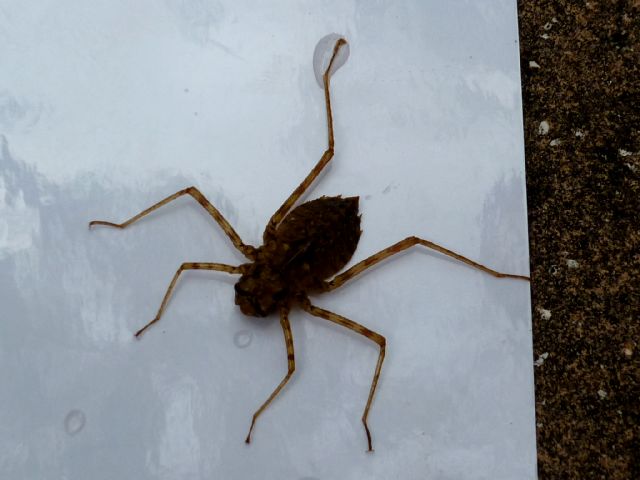
The Community Stream Investigation programme (CSI) was then explained more precisely. The teachers were taught on how to distinguish between healthy and polluted water through the presence of macroinverterbrates. Some insects were recently discovered in the region.
To seal his words, an extract from television news with truly shocking and alarming report was projected.
After a very good lunch at the Country Lodge Restaurant we went to the Sungai Pauh Forest Reserve for the practical part.
There Dr Liau explained how to analyse the water quality along Sungai Bertam and Sungai Pauh.
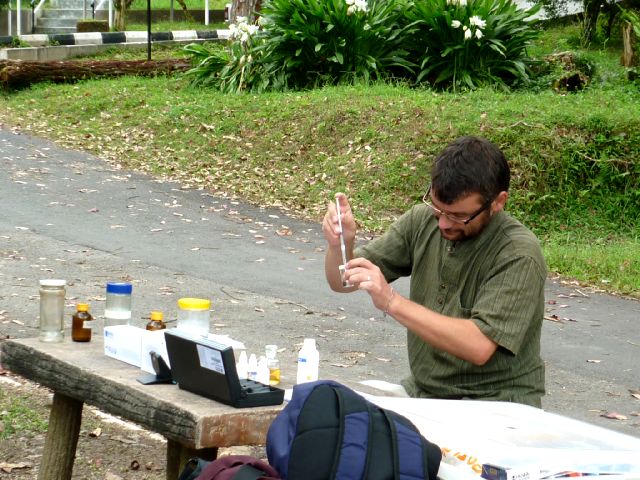
We learnt how to use the multi meter tester to determine the pH value, the TDS (total disolved solid) and also electrical conductivity (EC) of the water. Freddy tested water samples to determinate nitrate, phosphate concentration, dissolved oxygen, and of course, the presence of pesticide.
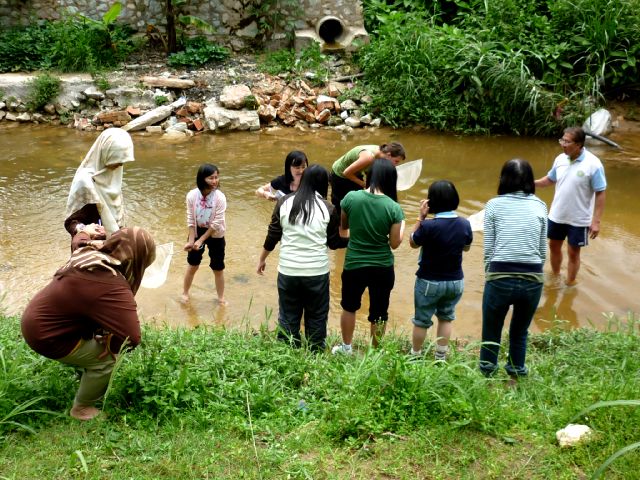
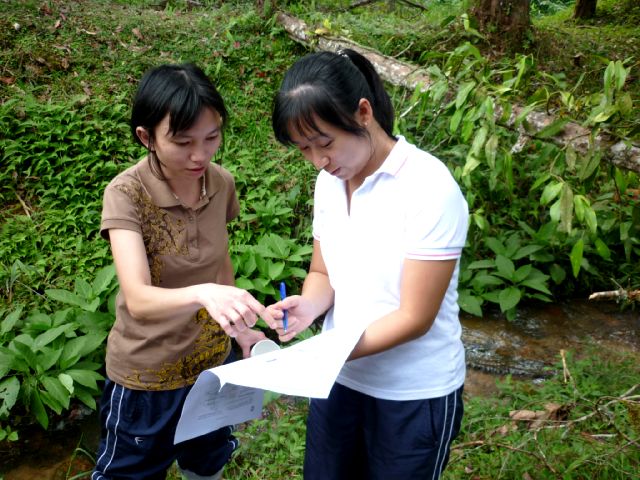
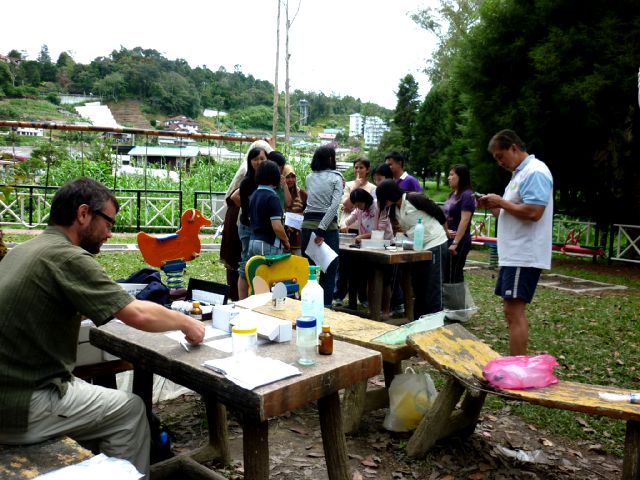
The teachers started their CSI research. They were separated into 2 groups, one under the guidance of Dr. Liau and the 2nd under one of his student.
Together, we looked for and netted various species of invertebrates to identify their various tolerances towards the level of water pollution.
Two species not yet listed during the CSI program were discovered.
Sungai Bertam is actually more polluted than Sungai Pauh due to the agricultural activities upstream. The latter achieved a high water quality index.
At the end of the day, the teachers tested their own tap-water as well as stream water, distilled water, mineral water and reverse-osmosis water.
From the results, it was interesting to see the difference of Ph values, EC and TDS of each samples. Some stream water were good and some quite alarming, even when they were filtered. Distilled water has a pH=7.2, EC=0 and TDS=0, These results provide a benchmark for other samples.
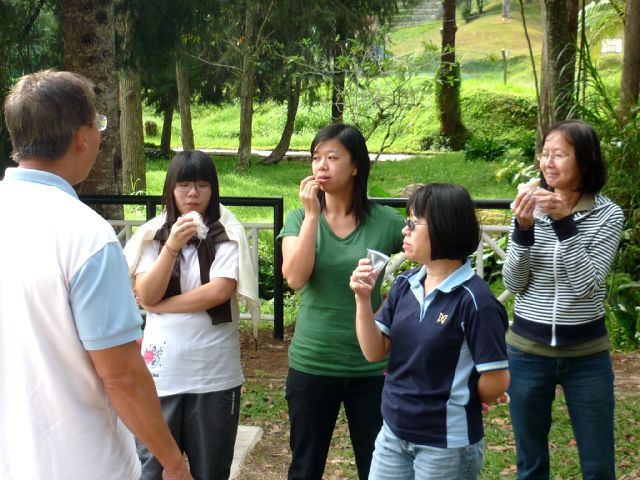
To finish the day, we had a nice snack together.
In conclusion, the teachers of SJK(C) Kuala Terla were very excited and enthousiastic about this CSI programme as much as us. We are now convinced that CSI is a very interesting, educational and enlightening way to educate youth about ecology. Specifically, it leads the students to become aware of water issues in their own area. Then hopefully they will try to protect the stream and spread the message to their relatives. We deeply thank REACH for giving us this invaluable experience.