


Donations (Tax Exempted)
Effective from the 15th January 2011, donations to Reach will be tax exempted.
Approval was granted by the Inland Revenue Board under Section 44(6) of the income Tax Act 1967. Ref:LHDN.01/35/42/51/179-6.6831
Gazettement Number: 7217. Donations will be acknowledged with an official receipt.
Donation Method
1. Online Fund Transfer
Maybank Account holders can log into maybank2u.com and follow steps shown:
Click Accounts & Banking / Bill Payments/ Make a One-off Payment/
Select from List / Zakat & Charity/
Select from List / REACH/
Enter Amount, Customer Name, Customer Contact Number / Request TAC number/ Enter TAC number/
Confirm / Print Receipt and fax/email proof of payment to REACH
2. Cheques/Bankers’ Cheque/Bank Draft made payable to
Regional Environmental Awareness Cameron Highlands and send to REACH Mailing address (as provided below)
3. Payment banked directly into REACH Account at Maybank No.506 043 316 200 Swift Code: mbbemykl and fax/email bank-in slip to REACH
Proof of Payment
Please send proof of payment to REACH with the following particulars for receipts to be issued and posted:
Name, I/C Number ,Mailing Address, Email Address, Contact Number .
Please call REACH should you not receive your receipt within a month.
REACH Mailing Address:
Regional Environmental Awareness Cameron Highlands
No, 1, Main Road , Brinchang ( top floor)
39100 Cameron Highlands,
Pahang, Malaysia
Contact no :
Telephone/Fax No :05 4912978 ( 9am to12.30pm)
Hotline: 019 5145851
Email: reach.president@gmail.com
reach.corybas@gmail.com
Committee Members

The Society is a membership-based organization, managed by elected committee members on a voluntary, non-profit basis. The committee members comprising of local community representatives meet monthly to plan, organize and implement various activities including talks, exhibitions, camping trips, slide shows for the general public and members.
28/12/11 Building the Biodiversity Centre at Gunung Brinchang
|
The first stage – We knew that building a biodiversity centre up on the slopes of Gunung Brinchang was going to be difficult but never realised how difficult until work started early this month (we had initially decided that in order to save cost we would have to source for materials and hire skilled workers by ourselves rather than to contract out the project. We would also seek help from the Public Works Department and local farmers).
So it was with great enthusiasm that we embarked on this project but from the word go, we encountered problems. First, sourcing for building materials. Not many suppliers wanted to go up the narrow road to the reforestation site. “Road too steep; road too slippery; lorry too heavy; lorry no jack; lorry only 3 tons no 15 tons” were some of the replies we got. But the most interesting reply we consistently get was “ Road too many tourists!”, “Lorry cannot gos tan (reverse)” We finally found a reliable supplier whose prices were reasonable.“ No problem” the boss said, “ Just give us a day’s notice” Then at the local quarry, it was another learning curve for us. After 2 day’s of miscommunication we finally learned the difference between ‘quarry dust, crusher-run and ¾ aggregate’. We would like to thank the company managing the local quarry for giving us discounted rates on the materials. Next, transporting the materials to the biodiversity site.
That was a real logistic challenge indeed. Public Works Department (JKR) was kind enough to transport the quarry materials with their lorries. After major hiccups on the first 2 days a routine was soon worked out. The laden lorries started out from the quarry no later than 8.30 am in order to arrive at the site by 9am and come down from Gunung Brinchang by 9.30 am This was to avoid the influx of tourists to that area in the later part of the day which makes the one way road hazardous. Over the course of 14 days more than 20 lorry loads of building materials were transported. The last part of the transportation involved moving the materials from the side of the Gunung Brinchang road to the biodiversity site via a Do-It-Yourself road with a gradient of 30 to 40 degrees. That would not have been possible without the help of tractors from local farmers. The rains did not help matters and work had to be stopped for a few days at a time. Finally on the 19th December 2011, work on the foundation of the first Nissen Hut started.
|


27/10/11 Embassy of Finland has awarded a grant to REACH
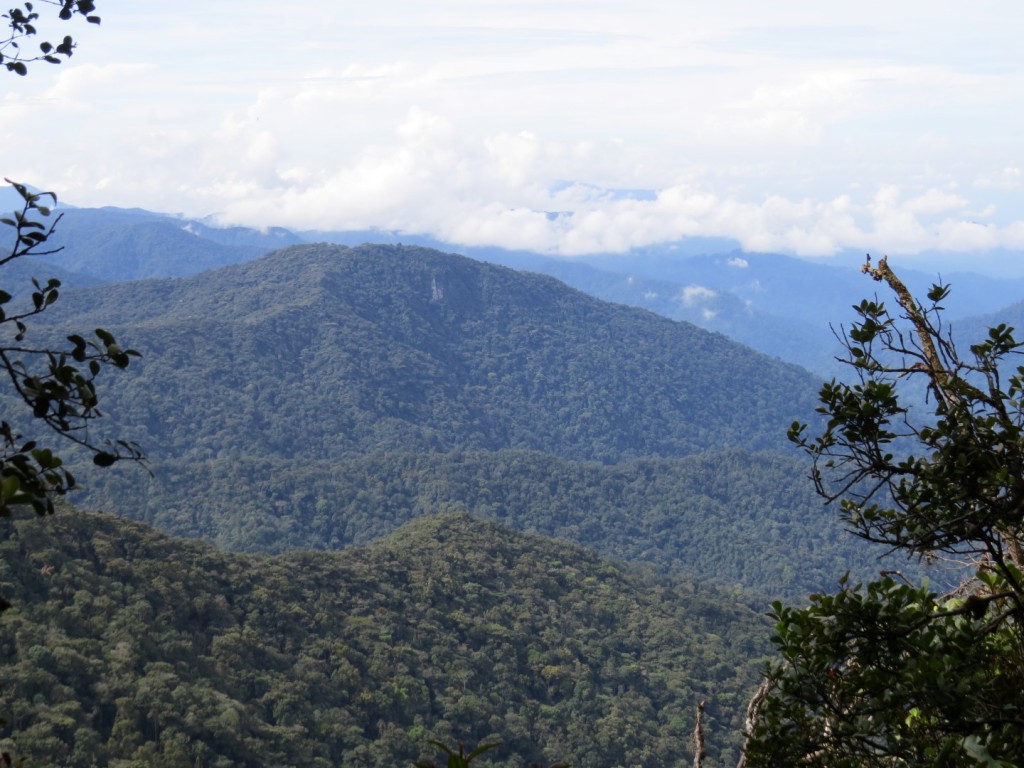
We are very pleased to announce that the Embassy of Finland has awarded a grant to REACH for our biodiversity project. On the 18th of October 2011 , the Ambassador of Finland, H.E.Tapio Saarela and Mr Ramakrishnan, President of REACH signed the agreement. This project will cover a period of 2 years and involves research, documentation and awareness creation of the cloud forest biodiversity in Gunung Brinchang,Cameron Highlands. A biodiversity teaching centre will be set up and talks on the cloud forest, jungle trekking and interpretive nature walks will be conducted for various community and student groups. Conservation and research areas will be set up for the endangered montane flora. Similarly observation areas for mountain fauna will be set up. There will be ongoing documentation of the mountain wildlife in this area. We would like to thank the Government of Finland for their support and confidence in us
.