





President’s Message
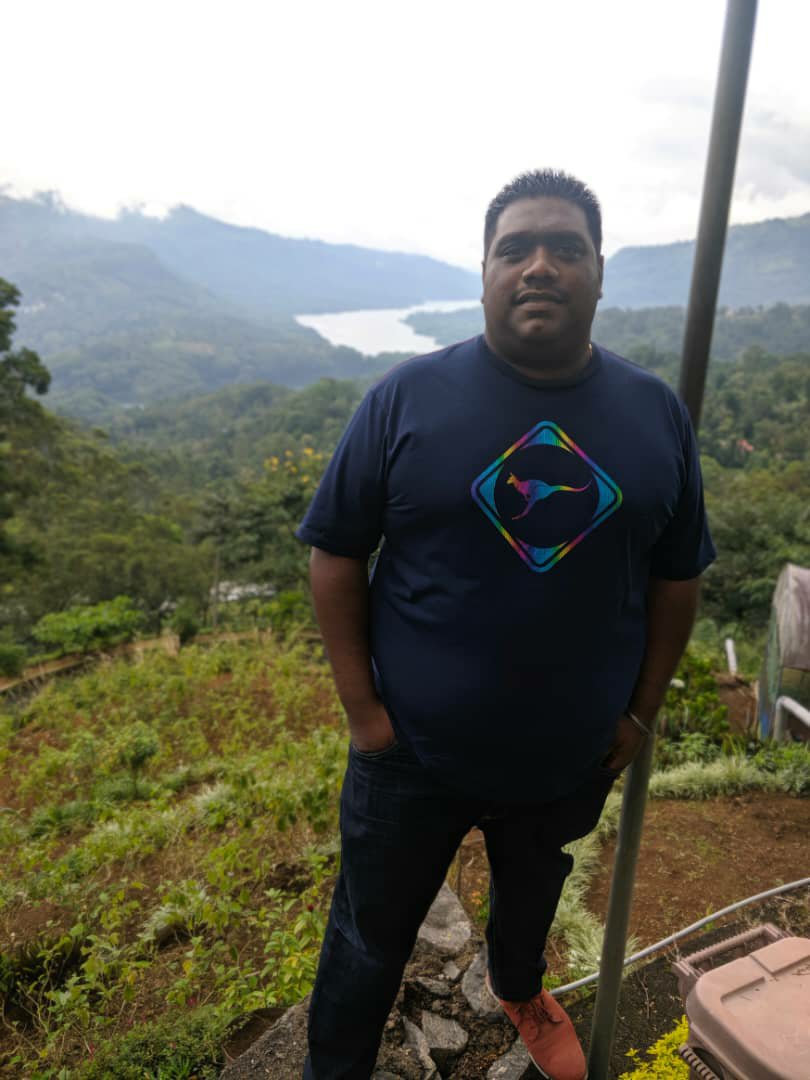
My fellow Cameronians & Friends
I write this as a sign of gratitude & thanks, for electing me as the new president of REACH.
REACH has always been spearheaded by my brother & close friend, the late Tuan Rama. Though it is still hard to digest his demise, and impossible to fill his shoes, I assure you that I will do my best with utmost integrity and responsibility, for this is my home.
This is the place I grew up. This is the place that educated me and made me who I am today. It is my duty to uphold what Tuan Rama & REACH has been fighting for through the years, in preserving and restoring the nature & environment of Cameron Highlands.
Watching their spirit and undying love for Camerons from a young age, has instilled a deep sense of attachment towards nature in me.
Reach is not about one man. Not about any individual. It is about our responsibility as a collective unit, towards the preservation of the environment, as well as our united effort to help restore the damage that has been done through uncontrolled development.
Together, with a strong committee, we will continue our work & effort as an awareness society, ensuring Cameron Highlands to be a sustainable agricultural platform while preserving the beautiful and lush rainforest.
Once again, my heartfelt gratitude in your confidence. Let us stand together, as one, fighting for what is right and caring for this place we call home.
Dilip Martin
Reach President
The Sound of the Rain
20th-Aprl-2014-A few months ago, a video clip of Parliamentarians discussing the environmental impact of farming on the tourism industry made the rounds in Cameron Highlands cyberspace. For many locals, it was difficult to watch that even in the august House of Parliament , Cameron Highland’s problems were taken so lightly and discussions, shallow. One of the comments made was that Cameron Highlands is no longer cold.
So what exactly is the weather like in Cameron Highlands nowadays? Has it gone a little weird? Is it warmer, colder, wetter or drier? Are the changes partly due to the global warming phenomena or are they due to the loss of the buffering effect of our highland forests or a combination of both? Do we have any data to substantiate what we say about the local weather?
If the subject of law is difficult to comprehend, the subject of weather is more so for we have nature’s wrath and unpredictability to contend with.
Below is a simple interpretation of the raw weather data of Cameron Highlands which dates back more than 55 years ago and attempts to answer the common questions pertaining to the weather in Cameron Highlands
Q 1: Is Cameron Highlands getting warmer?
The data that we have compiled is from 2 weather stations. From 1965 to 1983 the data were from the station located at 1471m above sea level M.S.L. , 4˚28’N 101˚23’E while the subsequent years up to 2013 were from the 2nd weather station located at 1545 M.S.L,4˚28’N 101˚22’E. Strangely the temperatures recorded at the lower weather station were lower than the one at a higher elevation.
Referring to the chart below, at a glance Cameron Highlands appears to be getting less cold. The lowest minimum temperature has risen from around 10 degrees Celcius to 15 degrees Celcius while the average minimum temperature has also risen slightly.
To the locals (applicable to non smokers only) it means “ Dulu kadang kadang bila cakap , ada asap keluar dari mulut , sekarang tak adok” “ Previously sometimes when we talk, vapour comes out from our mouths, now there is none!”
Mossy Forest Education Tour at Reforestation for Maybank Staff and family on the 16th March 2014
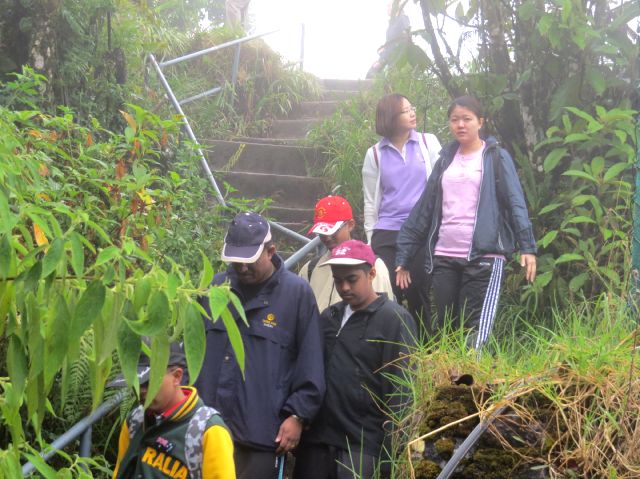
16th March 2014- Our mossy forest education tours are also open to local residents and Cameron Highlands Maybank staff,family and friends make a trip on the 16th March 2014. It was a cold morning with mist enveloping them as they make a trip up the forests on the peak of Gunung Brinchang,truly a cloud forest. They then continued to our biodiveristy site to do replanting with a light home cooked lunch in between. A very cold and wet day indeed.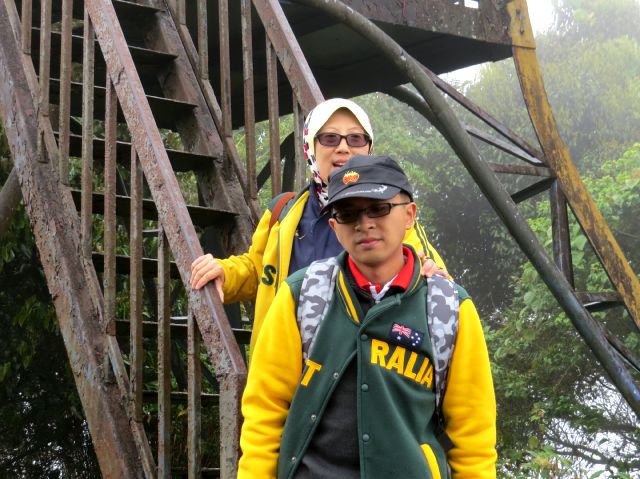
3/3/14 -Land of Opportunity
3rd March 2014-When one comes from a country raked in poverty and famine, with a population density of more than 1000/km2 and everywhere you look is a sea of humanity, the will to survive is strong. So strong in fact that you are willing to fork out a huge amount of money to people smugglers to take you to this land of opportunity .You are willing to brave treacherous journeys across war torn countries , spent months in the malaria infested jungles, drenched in rain, half starved for you have heard that great riches await those who reached the shores of this beautiful country called Malaysia . You have heard that in many areas in Malaysia, food is plentiful and laws are lax.
One such area is Cameron Highlands. Words have come that in a neighboring village a man called Jasir Miah could buy padi fields, a rice factory, a big house and have 4 wives after spending only 8 years in Cameron Highlands. “Where is this place called Cameron Highlands?” you ask yourself, “ I have to reach it. There are tons of money to be made there.”
So our town which is surrounded by greens and drenched in corruption becomes a magnet to foreign workers , legal and illegal. Currently there are more than 10,000 legal foreign workers here . They are mainly from our neighbouring countries such as Bangladesh. Myammar, Indonesia , Nepal , Cambodia and Vietnam with Bangladeshis forming the majority.
Most of them work in the agricultural sector . The rest are in the service sector ( including in the hotel industry and as domestic maids) and in construction. They are usually industrious, do not mind working in tough conditions and for extended hours. Many have an entrepreneurial spirit. Their desire to earn money to help their families back home is very strong. So bending rules to achieve their aims becomes common
While we welcome legal foreign workers as they are needed in our farms and other sectors of the economy if they come here illegally , become involved in businesses and deprive our locals of their sources of income, spread diseases and create a demand for illegally cleared land, we see red. . (Foreign workers “businesses” in Cameron Highands now include food and souvenirs stalls, hotels, grocery shops, taxis and transport lorries.)
Yes, workers ,legal and illegal, are now the biggest culprits clearing land illegally in Cameron Highlands.
Typically when a foreign worker first arrives here, he will be legally employed ,usually as a farm hand. Once he is more settled he will look for a piece of forest to clear illegally. This will usually be deeper into the forest and the way it is cleared is also fairly typical. It will usually be done by hand and then burnt with the surrounding trees intact to make it less obvious (eg in Gunung Siku, Kuala Terla forest reserves and forests deep into Tringkap.) Some are down right obvious such as those by the roadside in K.Terla . If the locals pay X amount to corrupt officers to look the other way, the foreign worker pays double or much more.
For water, it is sourced from the ever dwindling streams. For fertilizers and pesticides it is ‘sourced’ from their employers unknowingly or purchased from suppliers from Thailand including banned pesticides. This banned pesticides are preferred because the vegetables grow faster, look ‘prettier’ cost is lower and these pesticides laden vegetables are now finding their way to our local wet markets.
To work these illegal farms, the legal foreign worker will use his network of friends to hire workers from his own country who have arrived illegal usually through Myammar, Thailand and then to Butterworth.
By having illegal farms , the foreign worker can earn between RM 10,000 to RM 50,000 a month depending on how large the farms are.
The illegal farm workers that were hired will eventually run off and open their own farms when they see how easy and lucrative it is. And another tract of virgin forest will go. So the cycle goes on and the environment suffers as a result of corruption and greed.
Forests are also cleared in hectares by local contractors with “connections” and these are sliced off to be sold to Bangladeshis. When the illegal clearing in Kg Jarik was exposed by the media 1 year ago, after the hue and cry had died down the Bangladeshis returned in the middle of the night to work their ‘purchased’ land.
The recent nationwide crackdown on illegal foreign workers is very timely indeed and we hope the operations will continue. The immigration officers were professional and quite a number of illegal foreign workers were apprehended early this year. In a village up North , illegal foreign workers remain in the jungle in clusters of 50 to 100 coming out only when the coast is clear, still working in the farms, chasing a dream at our envrionments’ expense.
As for our town , if we don’t get our act together and reduce corruption , we remain at the mercy of opportunists, local and foreign.
Ramakrishnan Ramasamy
20/2/2014 – Lorries can’t ‘log’ out of Camerons
BY ISABELLE LAI
According to a Cameron Highlands District Council 1995 by-law, timber lorries are banned from using local roads from KM64.96 in Tapah to KM86.31 at the Blue Valley border.
Council secretary Mazlan Mohamed Isa said his officers had gone over to the site in Carnation Park housing area, Tanah Rata, on Tuesday evening and forbade the lorry drivers from leaving the area.
He said the owner of the lorries had been informed of the law and was told to find an different type of vehicle to transport the logs out. Read more from the star.com.my
————————————————-
Note from REACH:
Another case of NO ACTION TALK ONLY from a gov. official. The lorries moved out without any agency stopping them. REACH can only highlight, we are a community group. It’s the government agencies who are empowered with the ACT’s and the laws at hand. And they choose to ignore it because the “powers that be” condone this blatant disregard of rules in Corruption Highlands.
Mockery – Lorry Balak on CH Roads
by REACH President
 What a mockery to enforcement in CH. Lorries being loaded with timber in CH. The sign board clearly states that timber lorries are not allowed to use the roads in CH. Ou complain to the MDCH and Forestry fell on deaf ears.
